
A structured path to stronger chess.
In-person group classes in Markham and Oakville for young players ready to deepen their understanding and apply it over the board.

THE ACADEMY DIFFERENCE
Some parts of chess are learned better together.
Private coaching can be excellent for focused individual work. But chess is also discussed and tested against other people. In a well-matched Academy class, students hear more questions, compare candidate moves and explain their thinking—not simply share an instructor.
Interactive studies and printed materials give that exchange structure. Students work through ideas with an expert instructor, apply them against varied classmates and reinforce the work between classes. Careful placement and structured Levels keep the group focused on useful challenge.
From shared analysis to independent practice.
Actual Academy Lichess study and Chess Steps reminder. Click either image to zoom in.
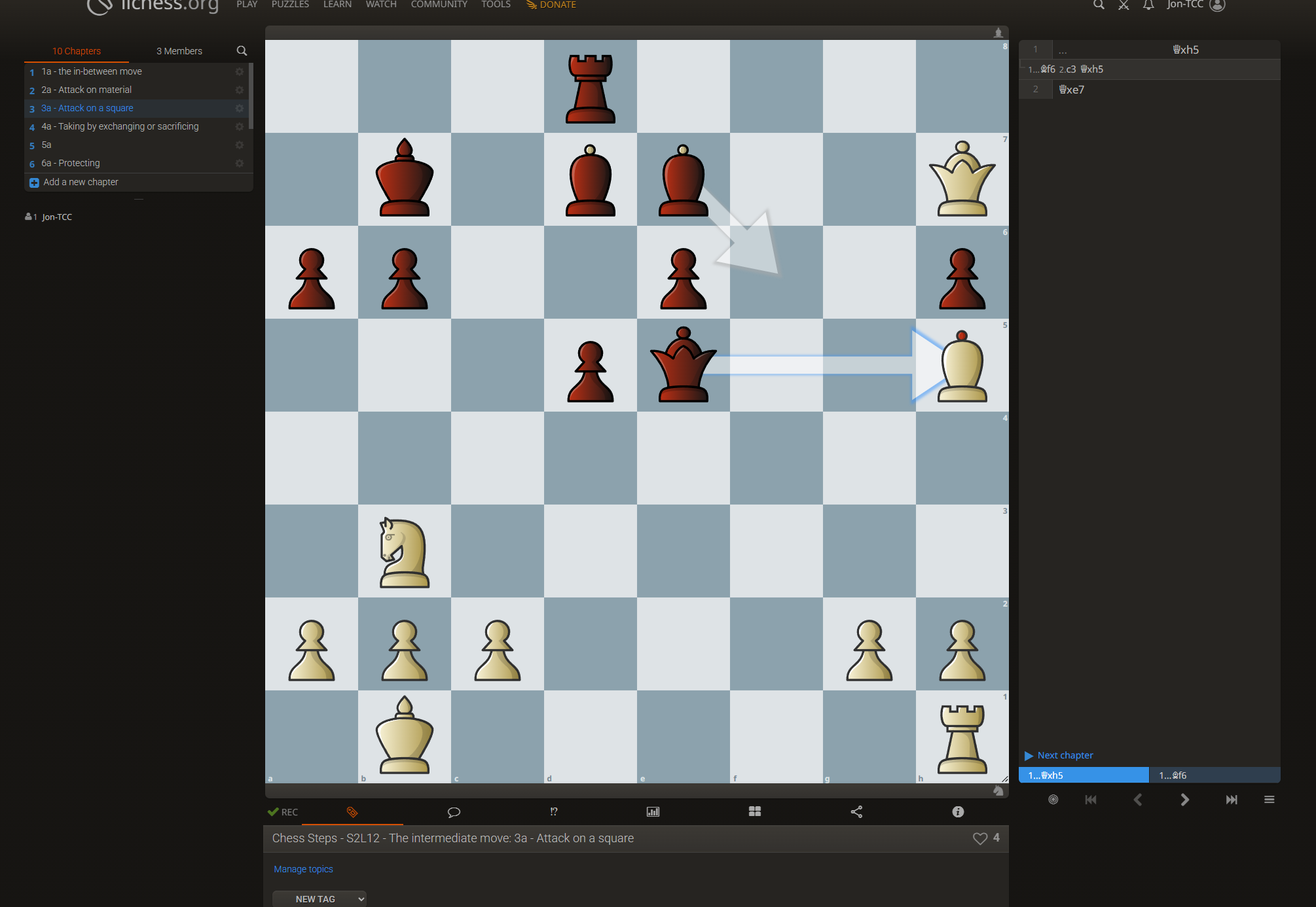
Interactive study
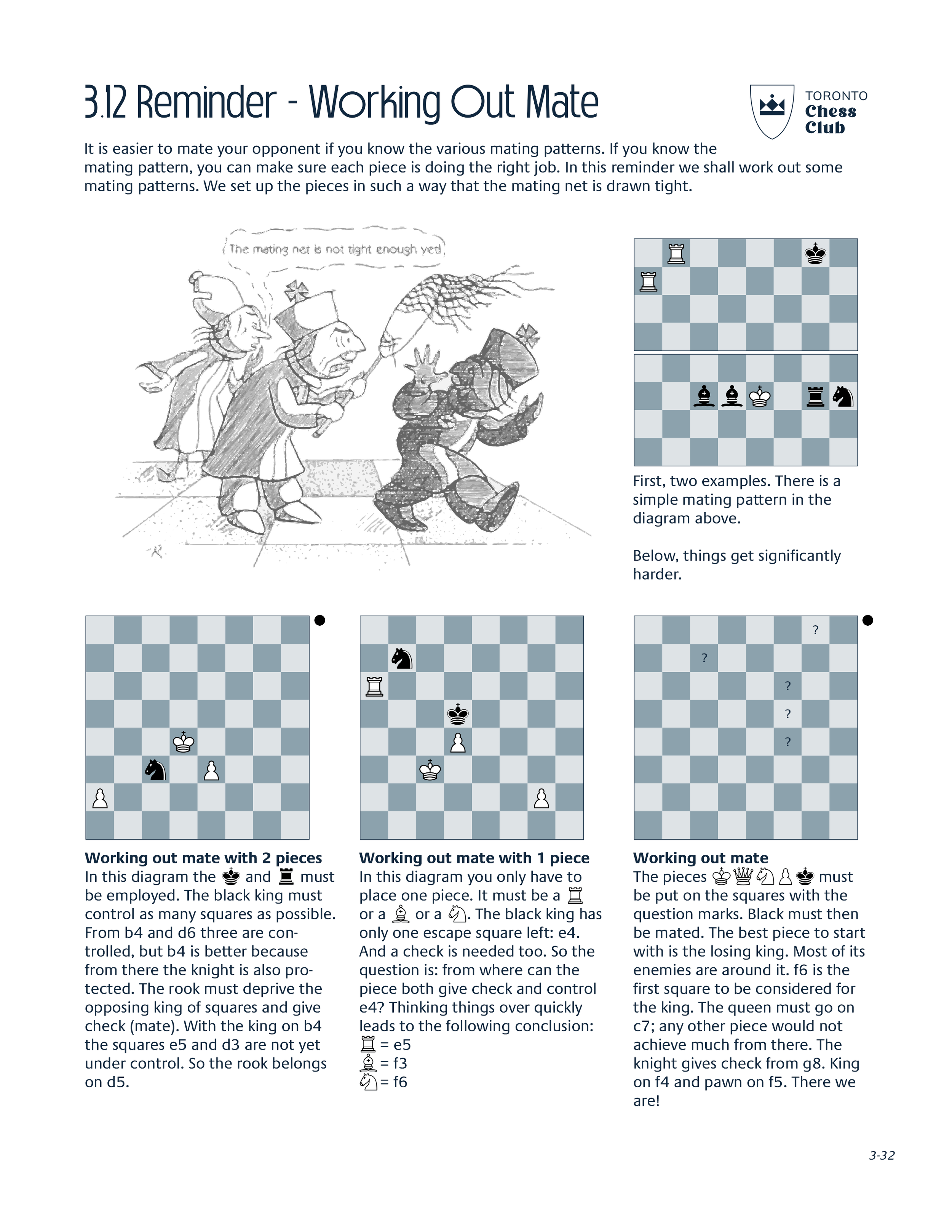
Chess Steps reminder
HOW ACADEMY LEARNING WORKS
Learn. Practise. Play. Reflect. Progress.
Each class follows a familiar learning rhythm, with enough flexibility for the instructor to respond to the topic and the group.
One connected class
-
START WITH THE IDEA
Learn
Review earlier work and explore one focused new concept in real positions.
-
BUILD THE SKILL
Practise
Build a usable skill through guided solving, interactive studies and learning materials.
-
TEST IT OVER THE BOARD
Play
Apply the lesson against classmates while the instructor observes and gives feedback.
-
MAKE SENSE OF IT
Reflect
Use discussion and game analysis to understand what happened and what to try next.
-
CARRY IT FORWARD
Progress
Reinforce the lesson with homework and make development visible through reporting and recognition.
BUILT FOR EVERY STAGE OF PROGRESS
Built by chess educators and organizers.
Young players are welcome here, from complete beginners to tournament competitors. Toronto Chess Club brings experience from lessons, clubs and rated and unrated events across the GTA to a structured Academy program built on the world-renowned Chess Steps curriculum.
Delivered in partnership with Lorvale Academy
THREE GTA CAMPUSES
Choose the location that works for your family.
Available Levels vary by campus. Every location offers free parking and wheelchair access.
MARKHAM
Markham East
Unit 2, 9833 Markham Rd.Markham, ON L6E 0E5
Academy Levels 1–3
MARKHAM
Markham West
Unit 101, 7550 Birchmount Rd.Markham, ON L3R 6C6
Academy Levels 2–4
HALTON
Oakville
373 Wyecroft Rd.Oakville, ON L6K 2H2
Academy Levels 2–4
Flexible registration includes prorated late enrollment and class or campus transfers. View full registration policies.
THE NEXT MOVE IS YOURS
Ready for your next level?
Join a structured Academy program built around learning, practice, play and visible progress.